Article about property taxes in Thailand: a complete guide for buyers
Property taxes in Thailand: a complete guide for buyers
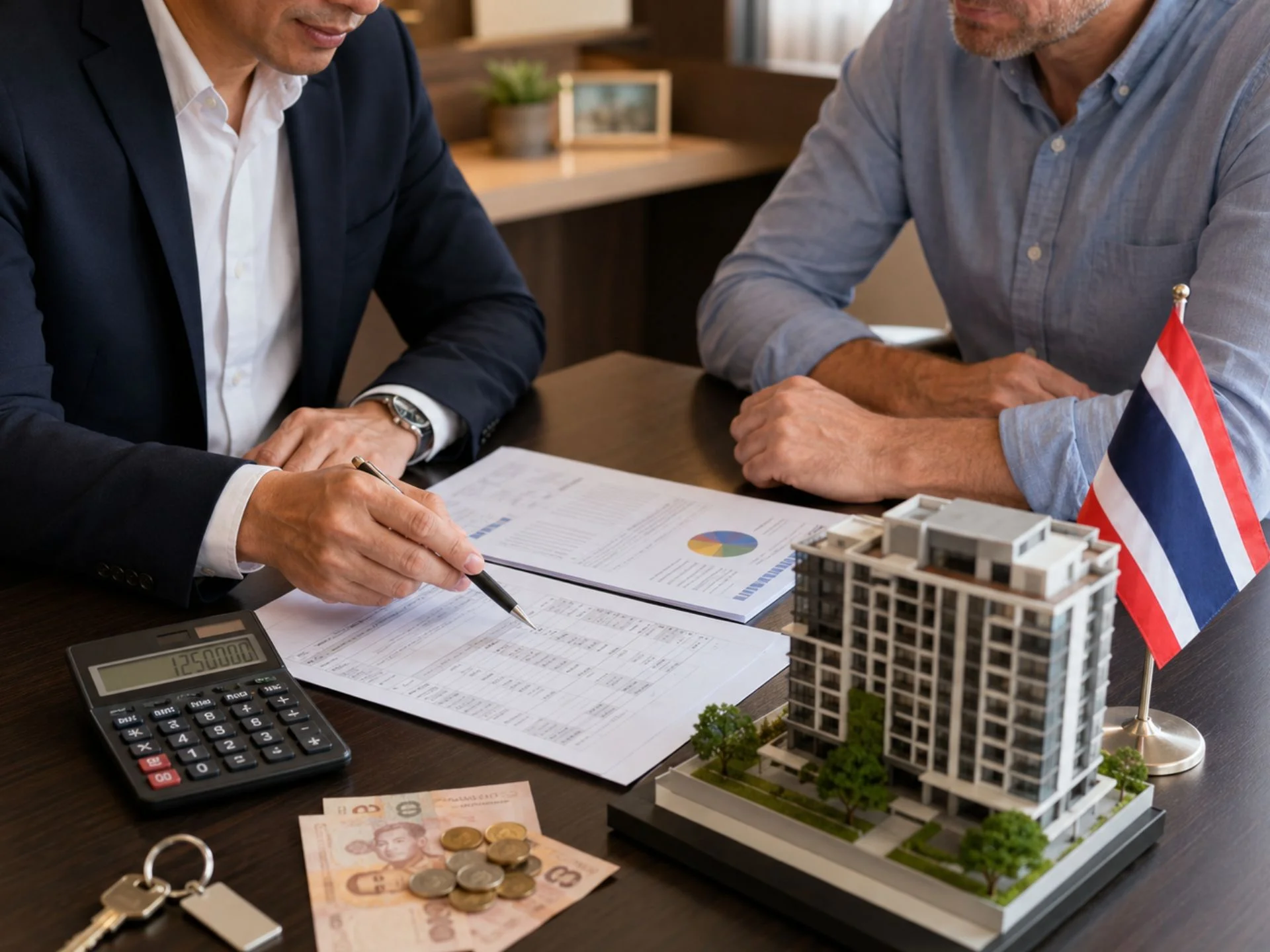
Buying property in Thailand involves more than just the price of the property. What fees are paid at the Land Office, how do expenses differ between Freehold and Leasehold, when does a tax arise when selling, and how is rental income calculated? The article contains the main payments at each stage of ownership, calculation examples, and the role of Tabien Baan in tax matters.
Thailand remains one of the most attractive countries for real estate investment - not only due to climate, infrastructure and rental demand, but also due to a favorable tax system, clear and predictable for foreign buyers.
What to pay when buying, owning, selling and renting? Let's clarify the key point right away - tax rates depend directly on the form of property ownership.
1. FORMS OF PROPERTY OWNERSHIP
In Thailand, there are two main ownership models:
Form
Essence
Term
Freehold (full ownership)
100% property ownership, full right of disposal
indefinite
Leasehold (lease)
long-term lease, registered by the state
30+30+30 years (up to 90 years by contract)
2. TAXES WHEN PURCHASING REAL ESTATE
The buyer pays a mandatory fee to the Land Office - registration fee (Transfer Fee), which is charged when property rights are transferred.
Freehold — 2%
Leasehold — 1%
Usually this expense is divided 50/50 between seller and buyer.
When purchasing from a developer, the law prohibits passing more than 50% of the fee to the buyer.
Government fee, paid at the land department (Land Office) when registering real estate on the secondary market.
The amount of the government fee depends on the form of ownership, for Leasehold it is 1.1%, for Freehold - 6.3% of the apartment value (if the seller is an individual). In the market, it is common practice for the seller to offer to split the government fee in half - especially when negotiating or when the property has high demand.
3. TAXES ON REAL ESTATE OWNERSHIP
Since 2020, the Land and Building Tax Act B.E. 2562 has been in effect.
Tax rates
Tax is calculated from the assessed value of the property (not market value!).
property value below 10 million ฿
no tax
property value from 10 million baht to 40 million ฿
tax rate is 0.02%;
property value from 41 million baht to 65 million ฿
tax rate is 0.03%;
property value from 66 million baht to 90 million ฿
tax rate is 0.05%;
Benefits
• Condominiums and houses worth up to 10 million ฿ - rate 0.02%. • The first 10 million ฿ of primary residence (if the owner is registered in the household registry) is not subject to tax. • If the owner is not registered in the yellow household registry - rate 0.3%.
Calculation example (if the owner is registered in the household registry)
Property cost: 13 million ฿ Benefit: 10 million ฿ Tax base: 3 million ฿ Rate: 0.02%
4. TAXES WHEN SELLING REAL ESTATE
Registration fee
Same rates as when buying: • Freehold — 2% • Leasehold — 1% Usually divided between seller and buyer
Business tax (Specific Business Tax)
Applied if you owned the property for less than 5 years. Consists of business tax - 3% and municipal fee - 10% of the business tax amount.
Not charged if: • you owned it for more than 5 years; • seller is an heir; • seller transfers the property to an heir; • seller was registered in the household registry for at least 1 year.
Stamp Duty
Paid if the property is owned for more than 5 years.
Form of ownership
Rate
Freehold
0.5%
Leasehold
0.1%
Income tax on profit (Withholding Tax)
Calculated based on assessed value and special deduction table, depending on the period of ownership (the purchase price and sale price of the real estate do not matter, the tax is calculated based on the assessed value in the land department (Land office)
The tax deduction is calculated based on the time the property is owned according to a special table:
Ownership period, years
Deduction, %
Income
Income tax
1
92
0 - 150,000
5%
2
84
150,001 - 300,000
5%
3
77
300,001 - 500,000
10%
4
71
500,001 - 750,000
15%
5
65
750,001 - 1,000,000
20%
6
60
1,000,001 - 2,000,000
25%
7
55
2,000,001 - 5,000,000
30%
8
50
5,000,001 and more
35%
EXAMPLE OF INCOME TAX CALCULATION (WITHHOLDING TAX)
Property worth 5,500,000 ฿, ownership period 3.5 years
1. Determine the tax deduction rate from the table
3.5 years rounds up to 4 years. For 4 years the tax deduction rate is 71%.
2. Calculate the taxable base for the entire period of ownership
Assessed value: 5,500,000 ฿ Deduction: 71%
Formula: 5,500,000 – (5,500,000 × 71%) = base for entire period
This is the tax base for the entire ownership period.
3. Calculate the base for 1 year of ownership
Ownership period = 4 years
1,595,000 / 4 = 398,750 ฿
4. Apply the progressive tax scale
Annual income: 398,750 ฿
Break down by levels:
Range
Rate
Calculation
0 – 150,000 ฿
5%
150,000 × 5% = 7,500 ฿
150,001 – 300,000 ฿
5%
150,000 × 5% = 7,500 ฿
300,001 – 398,750 ฿
10%
98,750 × 10% = 9,875 ฿
Sum up the tax for 1 year:
7,500 + 7,500 + 9,875 = 24,875 ฿
5. Multiply by the number of years of ownership
24,875 × 4 = 99,500 ฿
✅ TOTAL INCOME TAX ON PROFIT
99,500 baht
≈ 1.81% of assessed value
5. INCOME TAX FROM RENTAL
Most properties in Phuket are purchased for rental income, so this section is important. You can receive rental income independently or through a property management company. If you rent it yourself, the tax is filed personally or through a lawyer (service up to 5,000 ฿). If you work through management, all tax issues are handled by management.
If you are not a tax resident
• fixed rate: 15% of all rental income • no deductions or benefits
If you are a tax resident of Thailand
You must reside 180+ days per year.
Tax is calculated using a progressive scale. 70% of income is taxed after a standard deduction of 30%.
Annual income
Rate
0–150,000 ฿
0%
150,001–300,000 ฿
5%
300,001–500,000 ฿
10%
500,001–750,000 ฿
15%
750,001–1,000,000 ฿
20%
1,000,001–2,000,000 ฿
25%
2,000,001–5,000,000 ฿
30%
> 5,000,000 ฿
35%
Deductions:
• personal deduction: 30,000 ฿ • Leasehold: deduction = apartment cost / 30 years • expenses for dependents and children's education
EXAMPLE OF INCOME TAX CALCULATION (LEASEHOLD)
Apartment cost: 7,600,000 ฿ Form of ownership: Leasehold Guaranteed income: 7% for 5 years
1. Annual income
7,600,000 × 7% = 532,000 ฿ per year
If you reside in Thailand for more than 180 days per year, you become a tax resident, and tax is withheld at the rate of 5% (form PND3).
Initial withholding: 532,000 × 5% = 26,600 ฿
2. Tax deductions
Personal deduction - 30,000 ฿
Expense deduction for Leasehold
apartment cost / 30 years:
7,600,000 / 30 = 253,333 ฿
Overall taxable base formula
532,000 – 30,000 – 253,333 = 248,667 ฿ taxable income
3. Apply the progressive tax scale
Income
Rate
0–150,000 ฿
0%
150,001–300,000 ฿
5%
300,001–500,000 ฿
10%
500,001–750,000 ฿
15%
750,001–1,000,000 ฿
20%
1,000,001–2,000,000 ฿
25%
2,000,001–4,000,000 ฿
30%
More than 4,000,000 ฿
35%
Income of 248,667 ฿ falls in the range: 0–150,000–0% / 150,001–300,000–5%
Calculate tax:
first part (0–150,000) — 0%
second part (248,667–150,000 = 98,667) → 98,667 × 5% = 4,933 ฿
TOTAL TAX
Tax calculated: 4,933 ฿
Initially withheld by form PND3: 26,600 ฿
Amount to be refunded:
26,600–4,933 = 21,667 ฿
This amount can be: • returned to a bank account, or • credited against tax in the following year.
SUMMARY
With a value of 7.6 million ฿, Leasehold and 7% guaranteed income:
Annual income: 532,000 ฿
Actual tax: 4,933 ฿
To be refunded: 21,667 ฿
6. INHERITANCE TAX
If the value of real estate is up to 100 million ฿ — no tax is charged. Above 100 million ฿ — rate 5–10%.
7. Tabien Baan (household registry): short and to the point
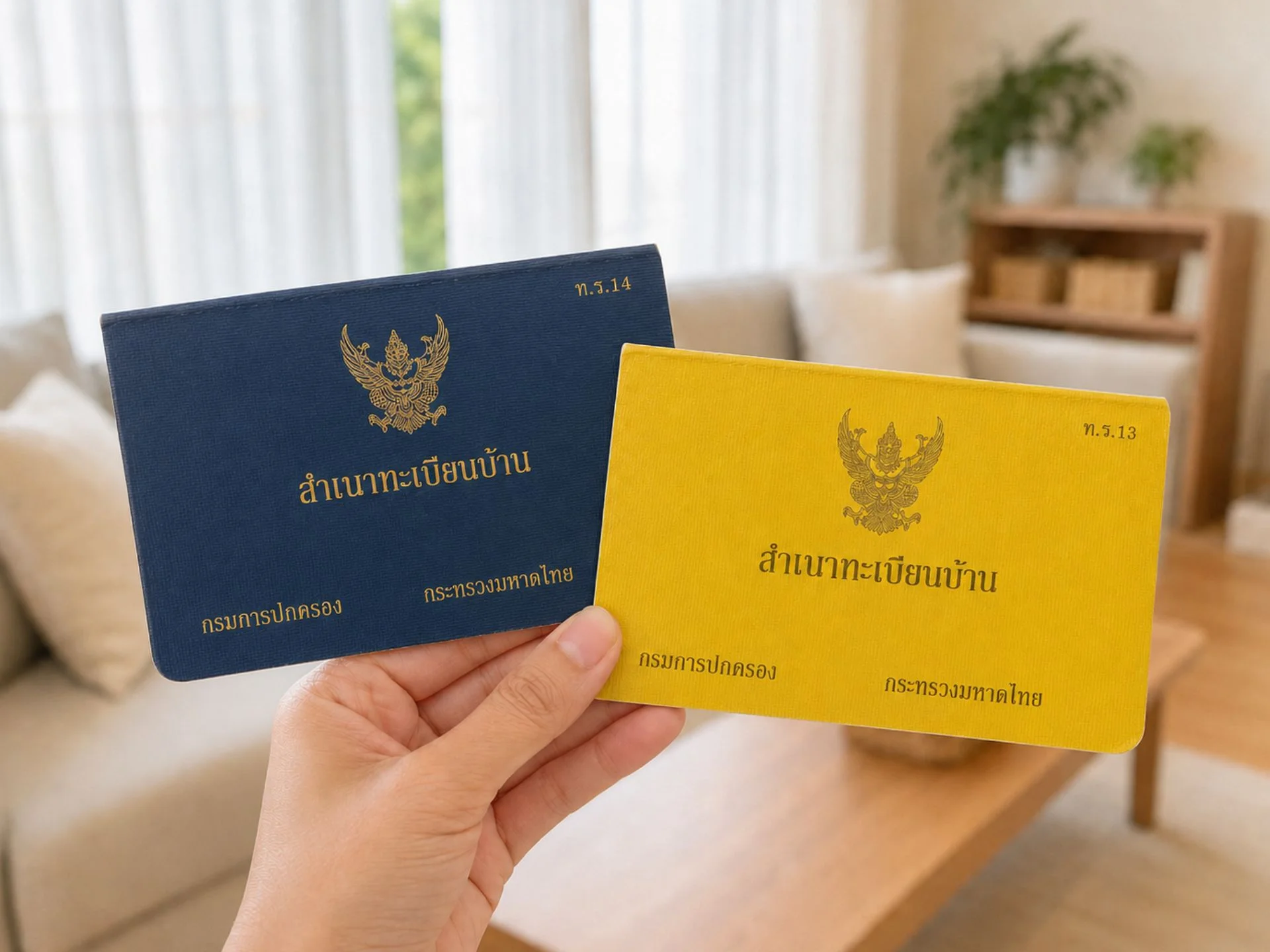
Tabien Baan is an official municipal booklet that records the address of a house or apartment and the people registered at that address. Important: this document does not confirm ownership rights.
Types of household registries
Blue (Blue Tabien Baan) — for Thai citizens.
Yellow (Yellow Tabien Baan) — for foreigners.
How it works for foreigners
If a foreigner owns a house (without land) or condominium apartments, they are issued a Blue household registry, which lists only the address of the property.
You can register your name if:
you have a long-term visa,
the person actually resides at this address,
they are the owner of the property.
After registration of a foreign owner, the Blue book is exchanged for a Yellow one, and their name is entered there.
Benefits of Yellow household registry
Exemption from property tax for properties worth up to 10 million ฿ (if permanent residence is maintained).
Exemption from Specific Business Tax when selling apartments if the owner was registered in the Yellow book for at least 1 year.
CONCLUSION
Thailand's tax system is one of the most transparent and understandable in Asia. For a buyer, it is important to understand what fees arise at each stage: when buying, owning, selling or renting.
We, as an experienced agency, will help calculate all taxes for a specific property, check documents, explain ownership terms, tell you about benefits and suggest ways to optimize expenses.
Yes. Foreigners can purchase condos as Freehold subject to quota, and also use long-term leasehold structures. We advise on transaction structure for both primary and secondary markets.
02
What's the difference between buying off-plan and resale?
Off-plan often allows entry at an earlier price with installment plans. The resale market offers a ready property with clear ownership history.
03
Is Phuket suitable for relocation?
Phuket combines developed infrastructure, international schools, private hospitals, and high service levels. We help select areas and projects that fit your family's lifestyle.
04
Can I complete a transaction remotely?
In most cases, yes. We support clients outside Thailand and arrange the remote purchase process.
05
Do you help after key handover?
Yes. We advise on management, rental, and possible resale of your property.
06
Can a foreigner buy a villa if land in Thailand is not sold to foreigners?
Yes, through separate rights: the villa is registered as Freehold, full ownership, while the land under it is taken on a long-term lease for 90 years. This is the most common and effective method for foreigners in Phuket, and we arrange it for most of the villas we select for clients.
Leave a request, we will definitely contact you!
Thank you!
We will contact you shortly.
Failed to send the request. Please try again or contact us another way.
Leave a request, we will definitely contact you!
Leave a request for this property and we will contact you